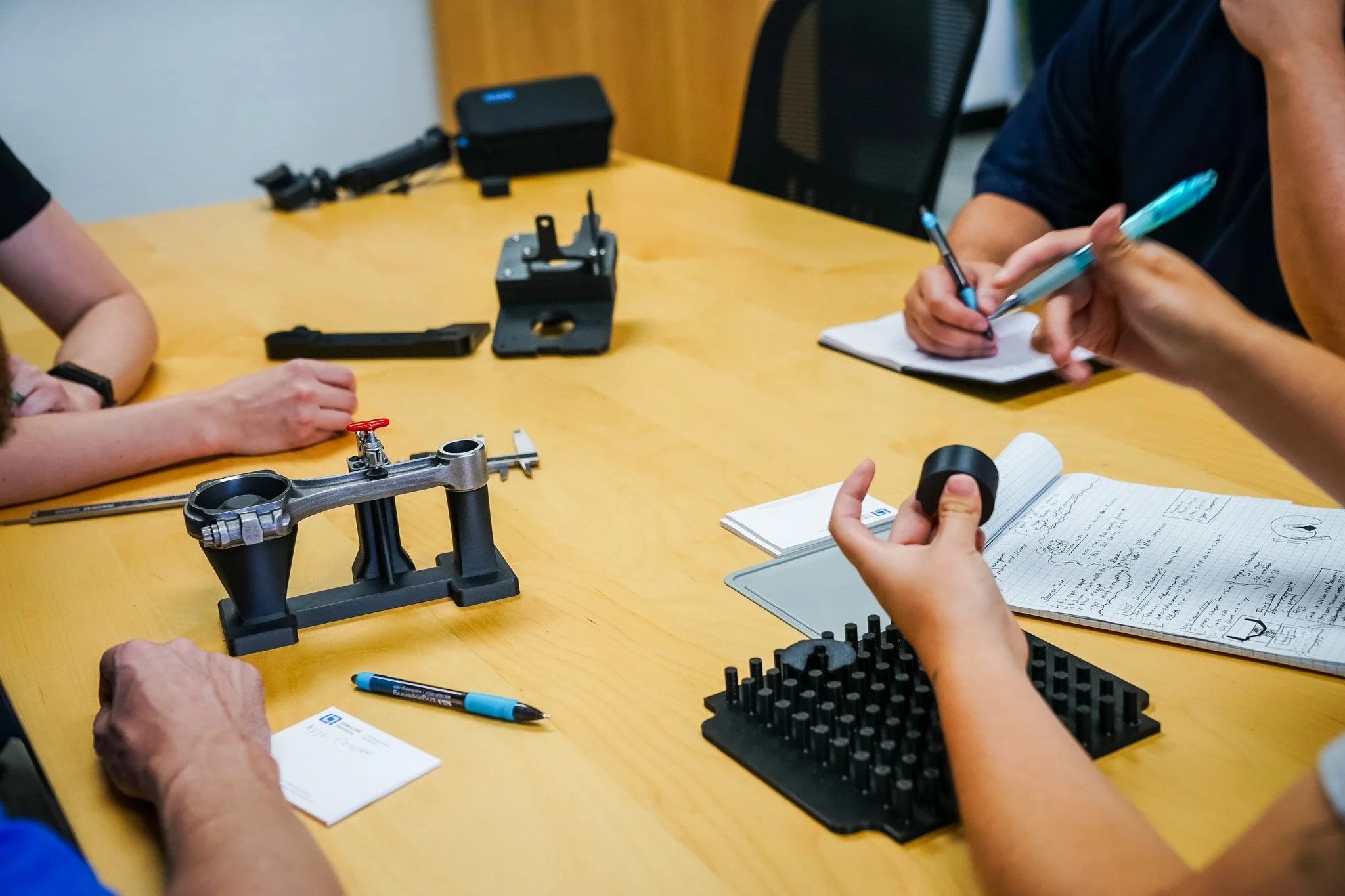
Every Great Product Starts With a Problem
If you’ve ever looked at a product and thought, “there has to be a better way,” you’ve already experienced the beginning of the design process. Every product on the market exists because someone identified a problem worth solving. What many people don’t see is everything that happens next: the sketches, prototypes, testing, failures, adjustments, and improvements that gradually transform an idea into a successful product.
Great products don’t usually start as great products. Instead, they evolve over time as teams learn more about the problem, explore different solutions, and refine their designs through testing and feedback. That’s what the design process is all about. It’s the journey from identifying a need to developing a solution that is functional, practical, and ready for the real world. More importantly, it’s often the difference between a good idea and a product that truly works.
Defining the Need
Every successful product exists because someone saw an opportunity to solve a problem.
Sometimes that need comes from frustration with an existing product. Maybe it’s difficult to use, too expensive to manufacture, prone to failure, or simply doesn’t perform as expected. Other times, the need comes from a gap in the market or an opportunity to improve a process.
Before any modeling, prototyping, or manufacturing begins, it’s important to understand what problem is actually being solved. The better you understand the problem, the easier it is to find the right solution.
This stage often involves asking questions and gathering information. Who will use the product? What are they trying to accomplish? What challenges do they currently face? What would success look like?
Understanding the need gives the project direction and helps guide every decision that follows. Without a clear understanding of the problem, even the most creative ideas can miss the mark.
Balancing Function, Experience, and Performance
Once the problem is understood, the real work begins.
Product development is often associated with technical expertise, but at its core, it’s about solving problems. Designers, engineers, manufacturers, stakeholders, and end users all bring valuable perspectives that help shape the final solution.
Developing a successful product involves much more than making something function correctly. Teams must consider how a product will be manufactured, assembled, tested, and used. User experience, reliability, cost, and performance all help shape the final design.
A successful product isn’t judged by performance alone. It also needs to be intuitive, practical, and enjoyable to use. The strongest designs balance technical requirements with the needs of the people using them. A product can perform exactly as intended, but if it’s difficult to assemble, uncomfortable to hold, or confusing to operate, it may still fall short of expectations.
Behind every successful product are the laws of physics. Whether it’s managing forces, controlling heat, directing light, or selecting the right materials, every decision has an impact. A small change in shape, material, or dimension can completely alter how a product performs in the real world.
This is why research and analysis play such an important role in product development. The more a team understands about the problem, the better equipped they are to develop an effective solution.
Why Prototypes Matter
No matter how much planning goes into a project, there is always value in testing an idea before moving into production. That’s where prototypes come in.
Many people assume a prototype should look exactly like the final product, but that is not always the goal. In many cases, a prototype exists to answer a specific question. Will this mechanism function as intended? Is the product comfortable to use? Can it withstand the expected loads? Does the design solve the original problem?
Prototypes allow teams to gather information that cannot always be captured through drawings or computer models alone.
They also create opportunities to compare different approaches. Sometimes two concepts may appear equally promising on paper, but physical testing quickly reveals strengths and weaknesses that would have otherwise gone unnoticed.
Every prototype teaches you something. Sometimes it confirms you’re headed in the right direction. Other times, it uncovers a flaw you never anticipated. Either way, that information helps the design evolve and reduces the risk of costly changes later in the development process.
Design is Evolution
One of the easiest ways to understand the design process is to think of it as an evolution.
The first concept is rarely the final answer. Instead, each version builds on the lessons learned from the one before it. Feedback is gathered, improvements are made, and the design becomes stronger with every iteration.
A prototype may reveal an unexpected issue. Testing may uncover a simpler solution. Customer feedback may highlight an opportunity to improve the user experience. Each discovery provides valuable insights that help shape the next version.
Whether the end user is an operator on a production floor or a customer purchasing a product off the shelf, the process remains the same: learn, refine, and improve.
The same principle applies to nearly every type of product. Testing reveals opportunities for improvement, improvements spark new ideas, and those ideas lead to additional testing. Over time, the design continues to evolve until the best solution begins to emerge.
More often than not, progress comes from a series of small improvements rather than one breakthrough moment. This process may take time, but it is often what separates a good product from a great one.
Why Simple Solutions Often Lead the Way
One common misconception is that every prototype or early concept must be highly detailed. In reality, some of the most valuable lessons come from the simplest models.
A rough prototype can quickly answer important questions and provide direction for the next phase of development. A simple proof of concept may reveal whether an idea is worth pursuing before significant time and money are invested.
In many cases, the quickest way to move a project forward isn’t building something complex. It’s building something simple that helps answer the next question.
Starting simple also encourages teams to focus on solving the core problem first. Once the fundamentals are proven, additional features and refinements can be added with greater confidence.
Many successful products begin with a basic concept, a rough model, or a quick test. The goal is not to create a perfect prototype. The goal is to learn something valuable and use that information to make the next version better.
From Concept to Reality
Every product you encounter has gone through its own version of the design process. Behind every finished product are countless decisions, tests, revisions, and lessons learned along the way.
The products we use every day weren’t created in a single moment of inspiration. They evolved through testing, learning, problem solving, and countless small improvements along the way.
The same process applies whether you’re developing a new consumer product, improving a manufacturing process, or refining an existing design. Great products don’t appear overnight. They evolve, and the design process is what guides that evolution.
At InterLink Engineering, we’ve helped bring ideas to life at every stage of the design process, from rough concepts and early prototypes to refined products ready for manufacturing. Whether you’re starting with a sketch on paper or refining a design that’s already in development, we’re here to help you navigate the journey and find the right solution.