What our engineers are glad they learned early
Every engineer has a lesson that stuck with them, and it often came from a mistake they made, or almost made. These lessons shape how they work every day.
With Thanksgiving coming up, we asked a few of our engineers one question: What engineering lesson are you thankful you learned early? We asked how they learned it and what they do now because of it. Here is what they told us.
1. Measure twice, cut once
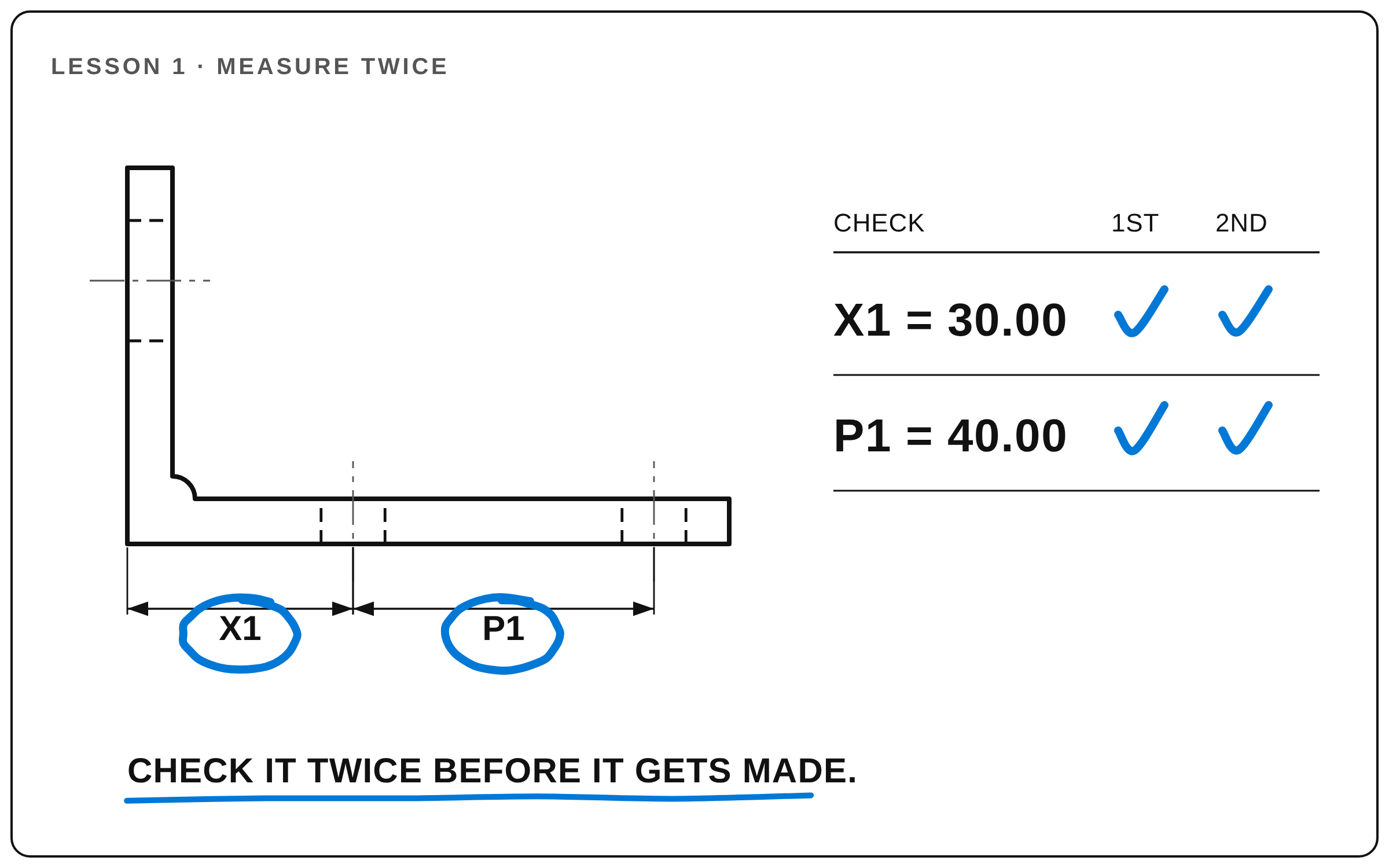
It’s the oldest tip in the shop, and it still works. One of our engineers first heard it from their dad, and then again from coworkers. But it didn’t really stick until they made a few small mistakes that one more check would have caught.
Now they check the numbers twice before they build a model, assemble parts, or send a drawing out. A wrong number takes seconds to fix at a desk, but once a part is cut, it can take days.
“Sometimes your mind plays tricks, so verifying measurements avoids a lot of decimal or fractional errors.”
2. Make it exact only where it counts
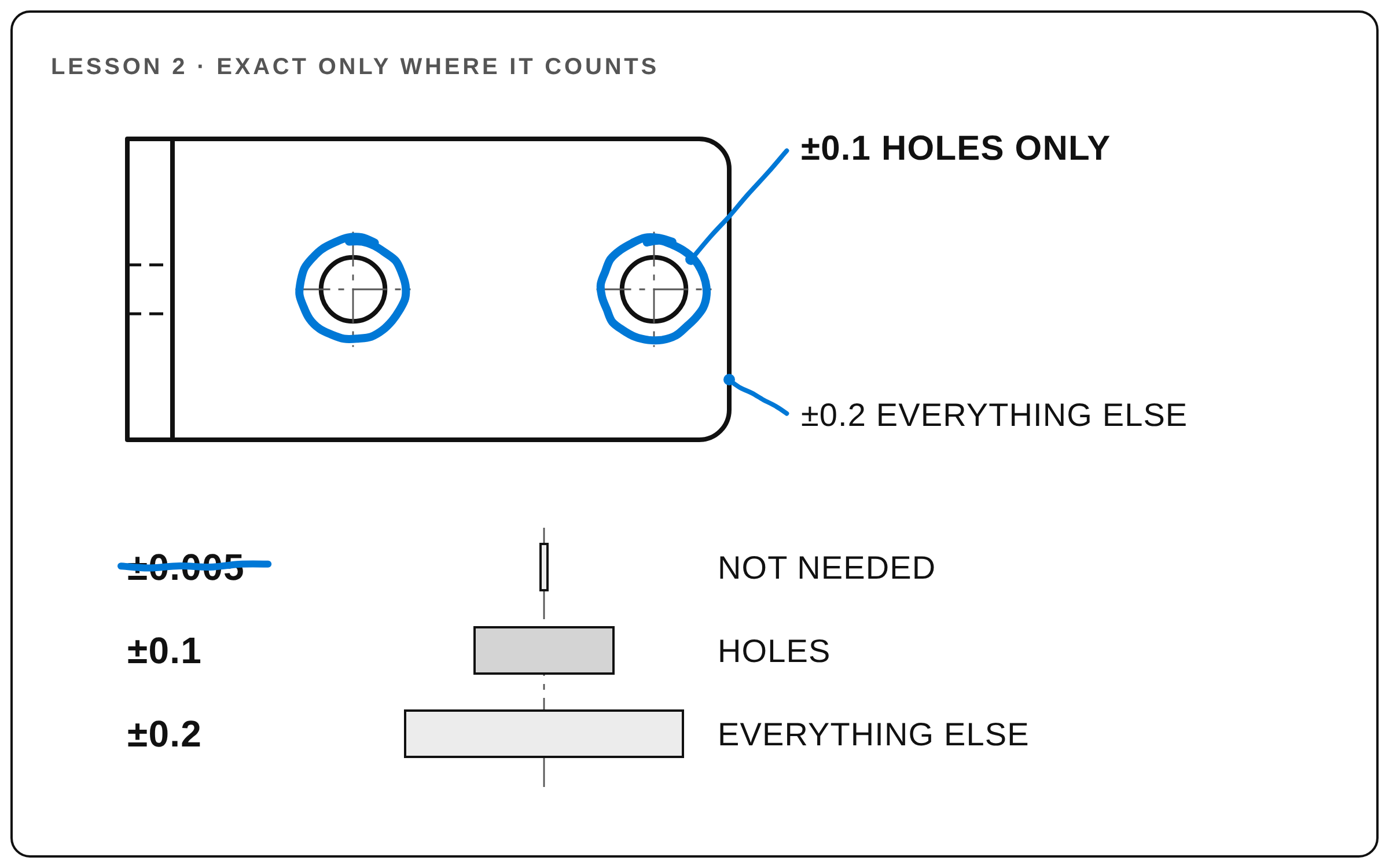
Tolerance is how much a part’s size is allowed to be off. A very tight tolerance can look smart on paper, but in the shop it means more time, more checking, more wasted parts, and a higher price. Sometimes the part never even needed it.
One of our engineers learned this by working side by side with the people who make and check the parts. Once they saw how hard some sizes are to hit, they stopped asking, “How tight can we make this?” Now they ask, “Does this need to be tight at all?”
Today, they only make a size tight when the part needs it to fit or work. Everything else gets a size the shop can hit every time.
“Understand more deeply how things are manufactured. Maybe work a day with manufacturing to better understand why things can be difficult.”
3. Read the drawing for the why, not just the numbers
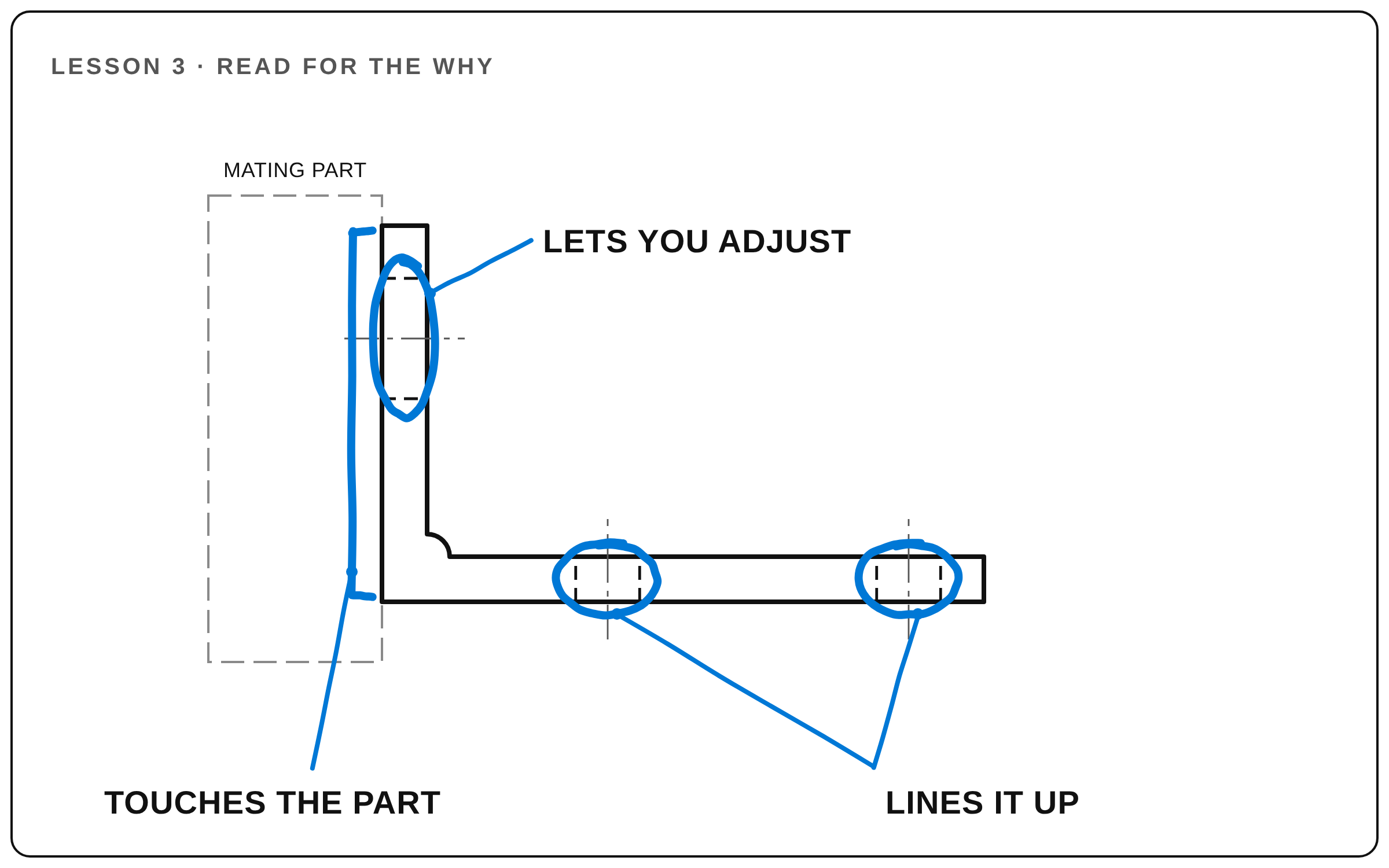
A drawing tells you what to make, but good engineers also ask why it was made that way. One of our engineers is glad they learned early to read a drawing and find the idea behind it, which engineers call design intent.
Knowing the why helps when the drawing doesn’t answer everything. Which side has to touch another part? Which hole lines the part up, and which one just lets a bolt through? When you know what matters most, you can spot a problem before it gets to the shop and suggest a fix that still works.
4. Fail fast, learn faster
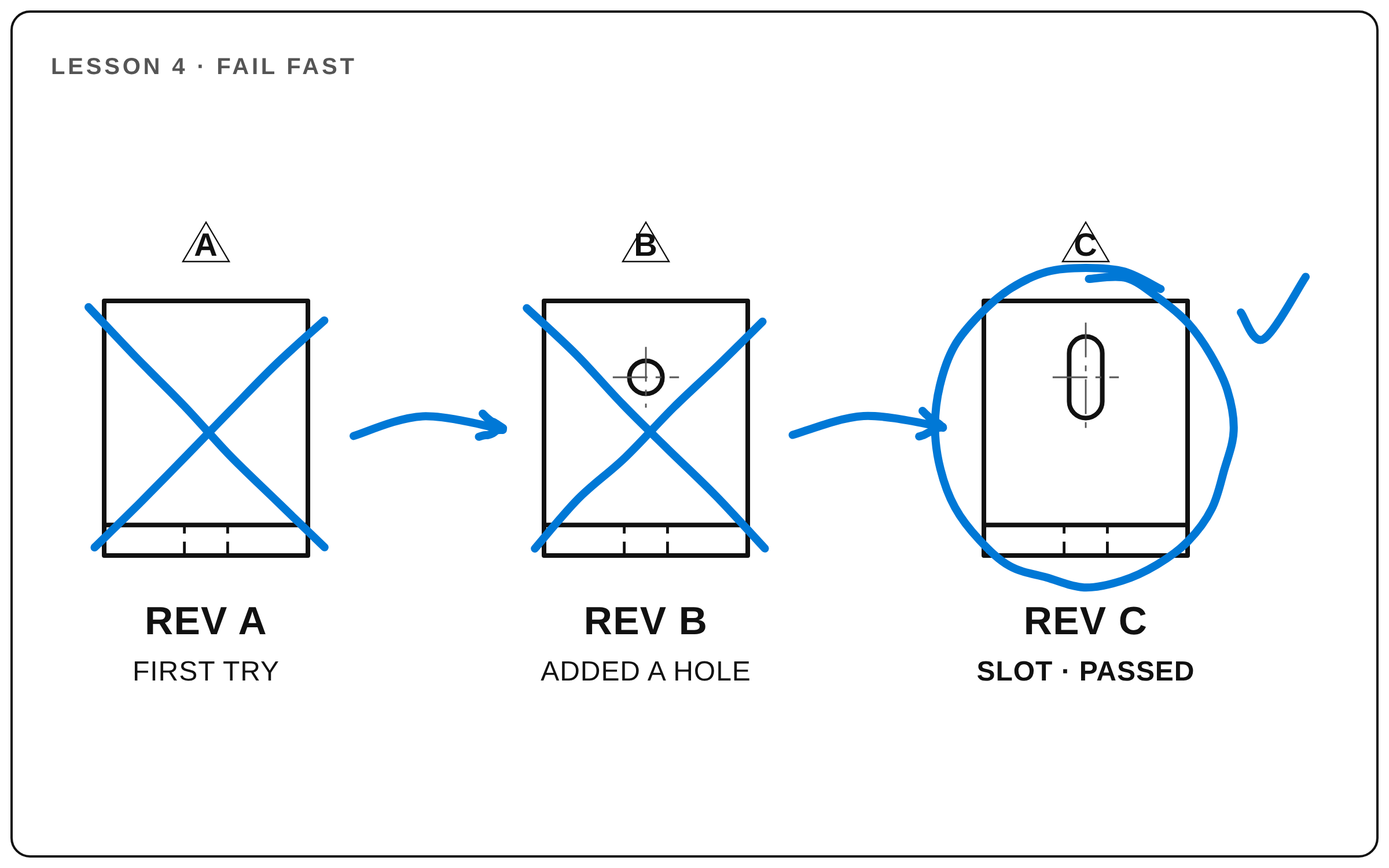
Great engineering isn’t about getting it right the first time. It’s about finding what doesn’t work, changing fast, and getting to a better answer sooner.
Two past bosses taught this to one of our engineers early on, and it still shapes how they solve hard problems. Test an idea before you spend a lot of time on it, and keep the answer simple. Most of all, don’t fall in love with a design if a better one comes along.
That way, you spend less time on a design that was never going to work, and more time on the one that will.
“Don’t be afraid of failing. Learn from your mistakes and adapt quickly. That’s all part of being a good engineer.”
What these lessons have in common
Put these four lessons side by side and you’ll see a pattern: each one helps a design on a screen become a real part that works. You check the numbers before parts get made, ask what the shop can really make, know what the design needs to do, and test the idea before it costs a lot.
None of these lessons came from a book. They came from bosses, parents, the shop floor, and mistakes caught just in time. That’s why we think about how a part will be made from day one, so your product gets made with fewer surprises.
Have a design that could use a second set of eyes before it hits the shop? Let’s talk it through.